
The Best Direct Primary Care Software, Job by Job
The best direct primary care software depends on which job you're solving, so this guide follows one member through your clinic and names the best tool at each step. In short, Hint or Atlas.md handles memberships and billing, Elation or Atlas.md handles the chart, labs and refills, Spruce handles texts and calls between visits, a simple link like Calendly or Cal.com books meet-and-greets, and PracticeQ or your EMR's own forms cover intake.
Every price below is the vendor's own published number, checked on each vendor's site in November 2026. Where a vendor doesn't publish a price, we say so instead of guessing.
The whole journey on one page
Most "best software" lists sort tools by category, which leaves you to work out which ones actually cover your day. We find it more useful to start from the work itself. A member finds you, books a chat, signs up, fills out forms, comes in for a visit, gets labs drawn, needs a refill, sends you a message on a Sunday, renews, and sometimes has a card that fails. Some of them arrive through their employer. Each of those moments is a job, and each job has a best-fit tool.
| Job | Best tools | Starting price |
|---|---|---|
| Book a meet-and-greet | Calendly, Cal.com, Acuity | $10/mo (Calendly Standard) |
| Sign up and pay | Hint, Atlas.md, Elation | $290/mo (Hint Launch) |
| Intake forms and signatures | PracticeQ, Jotform, EMR forms | $29.90/mo (PracticeQ low volume) |
| Visit and chart | Elation, Atlas.md, Akute, Charm | Free (Charm, 1 provider) |
| Labs | Atlas.md, Akute, Cerbo, Hint EMR | Included in the EMR plan |
| Refills | Elation, Atlas.md, Charm, Akute | eRx included (Elation) |
| Messages between visits | Spruce, OhMD, Weave | $24/mo per user (Spruce Basic) |
| Renewals and failed cards | Hint, Atlas.md, Stripe | 2.1% + 30¢ per card (Atlas.md) |
| Employer members | Hint Pro or Scale | $320/mo (Hint Pro) |
You don't need nine tools for nine jobs. Pick the system that will hold your members and your chart first, check which of these jobs it already covers, and only buy separate software for the gaps.
Before they're a member: finding you and booking a meet-and-greet
The first job happens before anyone pays you. A prospective member reads your website, wants to ask whether you'll see their teenager or handle their blood pressure meds, and needs a way to grab fifteen minutes with you. This is a sales conversation more than a clinical one, so the tool that books it doesn't have to live inside your EMR.
The best tools for booking
Calendly is the easiest link to put on a website, with plans starting at $10 a month on Standard and $16 on Teams. It's a good fit for a meet-and-greet that asks no health questions, since it isn't built as a medical record. Cal.com is a scheduler you can customize (and even self-host), offered with HIPAA compliance for healthcare practices, at $12 per user a month on its yearly Teams plan. Acuity Scheduling lets people book from a branded page and pay when they book, at $55 a month billed annually or $69 month to month.
If you'd rather keep everything in one place, PracticeQ's Practice Management plan ($84.90 a month) includes a booking widget alongside forms and payments, and several DPC EMRs offer their own scheduling. The tradeoff is worth weighing in scheduling software for DPC, which covers meet-and-greet setups in more detail.
Joining: sign-up, payment and intake
This is the moment revenue starts, and it's where the most tools tend to touch one person. The new member picks a plan, puts a card on file, signs your membership agreement and fills out a health history. If those four steps happen in four different places, someone on your team ends up stitching them together.
Signing up and paying
Hint is the platform most DPC clinics recognize for memberships. Member enrollment, recurring billing and payments are included on every plan, and the Launch plan is $290 a month for one clinician with unlimited members (with its EMR on the same record). Card processing on Launch is 3% plus $0.30, and ACH is 1% plus $0.25. You pay nothing until your practice launches, which matters when you're still building your first panel.
Atlas.md puts membership billing, charting and an in-house pharmacy under one price of $300 a month per registered provider with unlimited patients. Its card rate is 2.1% plus 30¢ and ACH is 1.1% plus 30¢, and it offers subscription prorating and fixed-rate billing options. Elation has Membership Management built in, which needs a Stripe account and charges 2.99% of card payments or 1% plus $0.25 per ACH payment (capped at $5). Akute can add Hint Core billing for $50 a month on its Essentials plan.
Our membership billing guide compares billing periods, plan controls and processing fees side by side.
Intake forms and signatures
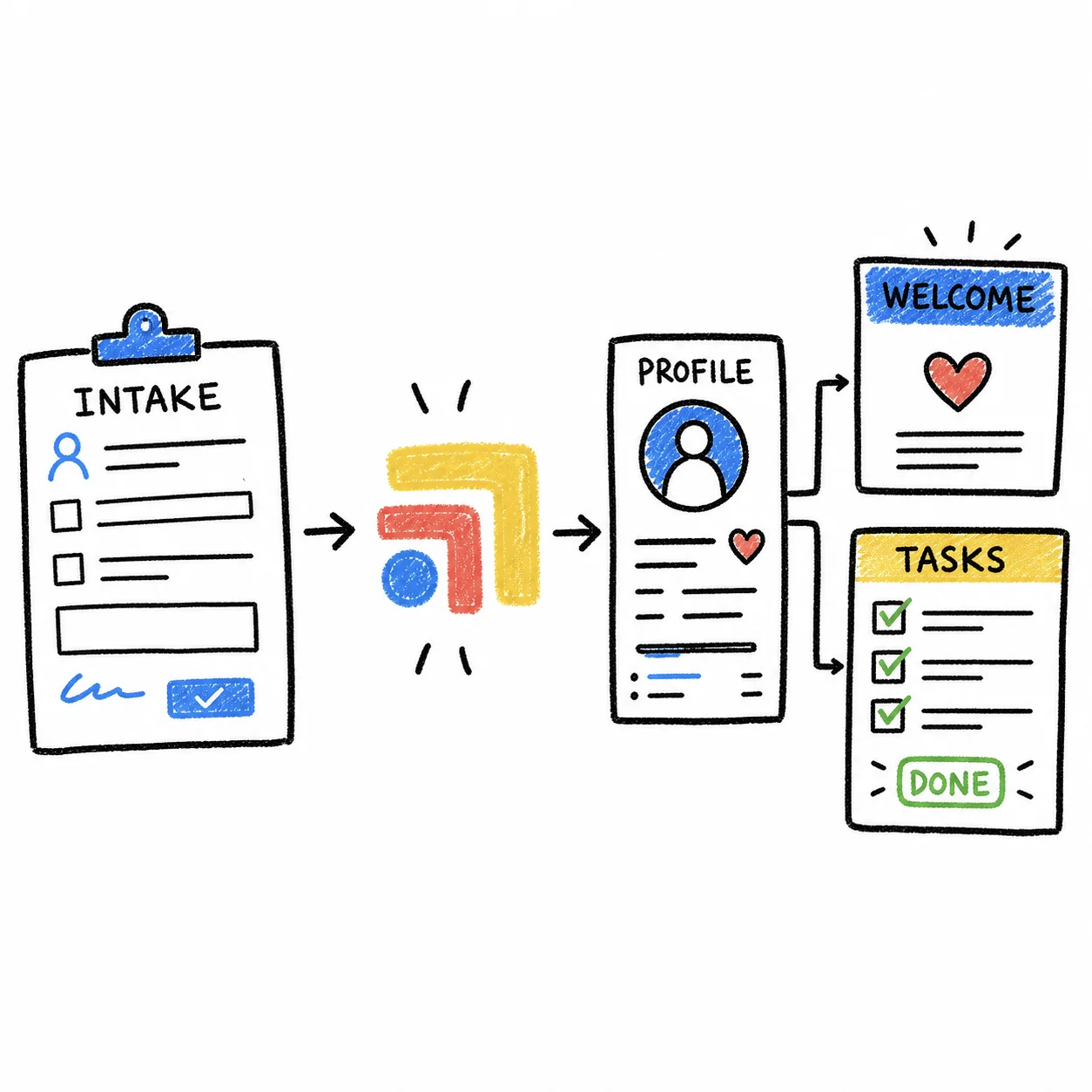
PracticeQ is the most direct answer if you just need good forms. Forms Only is $54.90 a month (or $29.90 for the low-volume plan with 10 submissions a month), with client and provider e-signatures and a HIPAA BAA listed on the plan. Jotform suits clinics that like building their own HIPAA-enabled forms, from intake to consent, with its Gold plan at $99 a month billed annually. For a standalone signature on an agreement, DocuSign can be configured for HIPAA, though its pricing is quote-based for healthcare setups.
Don't overlook what your EMR already does. Elation can read scanned, completed intake forms into discrete chart fields, which saves retyping a health history. We go through the options in patient intake forms and e-signatures for DPC.
The visit: the chart, labs and refills
Once someone is a member, most of your clinical day runs through the chart. Here the EMR matters most, and the right choice depends on whether you care most about how charting feels, about a predictable price, or about dispensing in house.
The visit and the chart
Elation is the charting-first pick, at $375 a month per provider on its Standard DPC plan with office staff included. It has scribing built into the encounter, with a broader paid add-on at $199 a month per provider. Atlas.md lists diagnosis suggestions, SOAP note creation and transcript summaries among its built-in charting tools. Akute starts at $300 a month for one clinician and 100 patients ($0.75 for each extra patient), with e-prescribing and telemedicine on the plan. Charm has a genuinely free plan for one provider (up to 50 encounters a month), and its Provider plan is $200 a month.
If you see members by video, Elation adds integrated telehealth for $25 a month per provider, Cerbo charges $27, and Akute includes it. Telehealth software for DPC compares built-in video with standalone options.
Labs
Lab ordering and results mostly come with your EMR rather than as a separate purchase. Atlas.md connects to large labs like Quest and Labcorp as well as smaller regional labs, Akute includes lab ordering and results on its plans, Cerbo offers bi-directional lab integrations that send requisitions electronically, and Hint's EMR includes labs. The harder part is not the order but the follow-up, making sure every result gets reviewed, explained to the member and acted on.
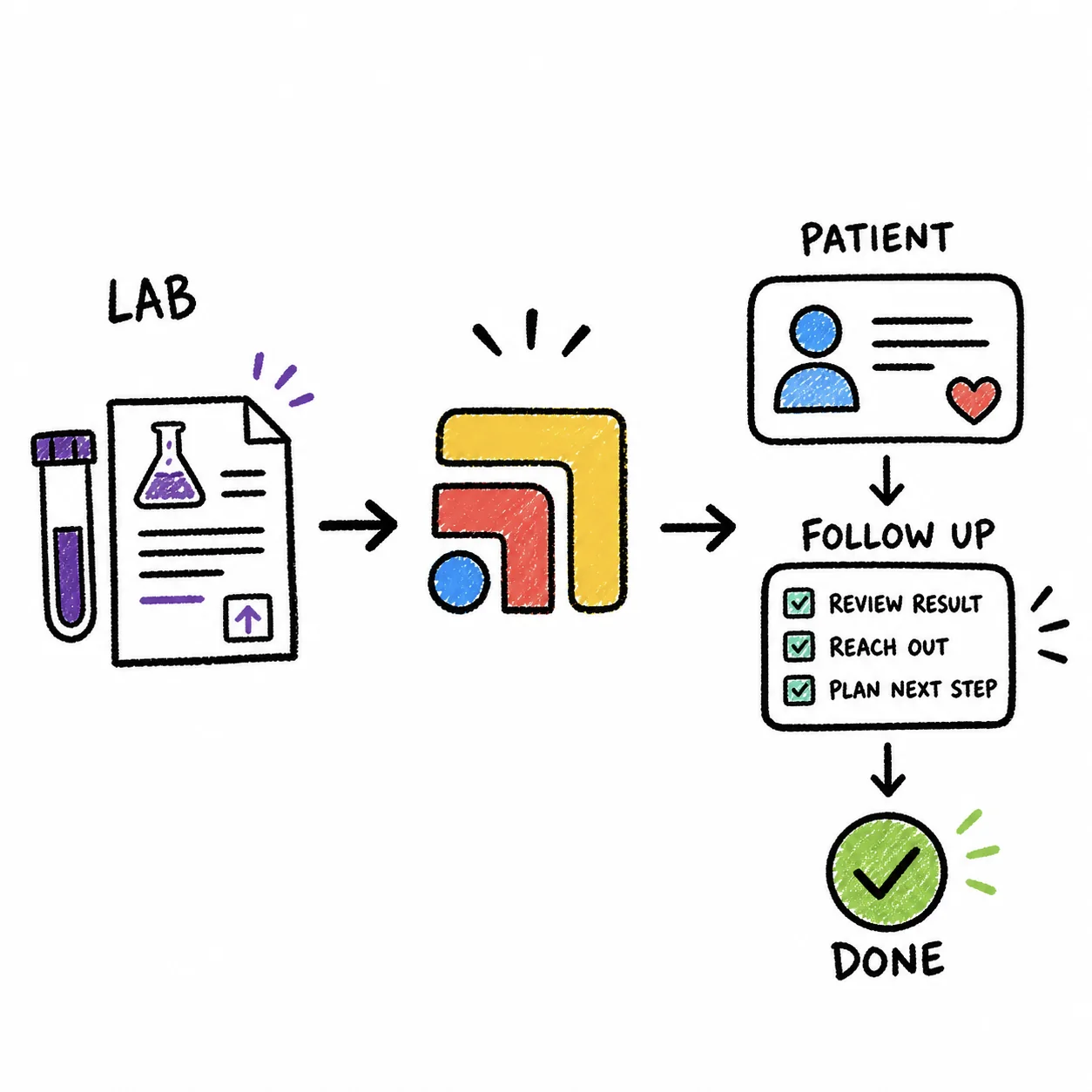
Our lab ordering and results follow-up guide walks through a workflow that keeps results from sitting in a queue.
Refills
Refill requests arrive by text, portal message and phone, and they all end in the same place, an ePrescription. The thing to compare is what ePrescribing costs on top of the base plan. Elation includes ePrescribing for controlled and non-controlled drugs. Atlas.md charges $475 to set up a prescriber and $400 a year after that, plus $525 per clinic for PDMP setup. Charm's eRx add-on is $15 a month per provider, and Akute's controlled-substance prescribing is an extra $15 a month. Hero EMR includes EPCS on its single plan, though its plan price is quote-based.
If you dispense in house, Atlas.md (unlimited inventory and dispensing) and Hint's EMR (medication inventory and dispensing) both handle it. For a request-to-pharmacy flow that doesn't lose messages, see prescription refills in DPC.
Between visits: messages and calls
Access between visits is what members are paying for, and it's where the volume lives. A good messaging tool puts texts, calls and voicemails in one shared inbox your whole team can see, so a question doesn't wait for one person's phone.
The best tools for messaging
Spruce is the most common choice in small DPC clinics. Basic is $24 a month and Communicator is $49 a month, priced per teammate, with a BAA included on every plan and a one-time $19.50 fee to turn on outbound texting. It covers phone, text, video and fax in one app. Spruce can sync texts and voicemails into the Elation chart and can pull in Hint's membership and plan tags, which helps when you have both.
OhMD starts at $300 a month and text-enables your existing office line, with voice and video calling on its Core plan. Weave starts at $199 a month and adds reviews and text-to-pay payment reminders to phones and texting. Your EMR's patient portal can also handle secure messages, and some members prefer it.
Patient texting and messaging software for DPC compares these on price per user, phone features and how each one connects to your chart.
Keeping members: renewals, failed cards and employer plans
The jobs at the end of the journey are the quiet ones, and they're where revenue leaks without anyone noticing. A card expires, a payment fails, a renewal date passes, an employer adds three new employees. None of it is dramatic, but each one is money or a member you could lose.
Renewals and failed cards
Hint lets you set a contract length per plan and choose whether it renews or ends automatically, warns you before cancelling inside a minimum enrollment period, and supports monthly, quarterly, semi-annual or annual billing (with an optional discount). Disputes and ACH returns cost $7.50 each. Atlas.md charges $15 per card chargeback and $5 per failed ACH transaction. If you're building your own billing on Stripe, cards are 2.9% plus 30¢, billing adds 0.7% of volume on pay-as-you-go, and failed ACH payments cost $4.
The software can retry a card, but someone still has to notice the failure and reach the member kindly. That handoff between the billing system and the people who talk to members is worth designing on purpose.
Employer members
Employer contracts are their own job, with enrollment, eligibility lists, consolidated invoices and reporting. Hint is the clear published option here, with employer-sponsored memberships, employer enrollment, eligibility autosync and consolidated billing on its Pro ($320 a month) and Scale ($770 a month) plans, though not on Launch. Extra eligibility autosync feeds are $75 a month each on Pro and Scale, and Scale includes three. Most EMRs don't publish employer billing tools, so ask on the demo how they'd invoice a company for 40 employees. Software for employer DPC contracts goes deeper.
Putting your stack together
Once you've walked the journey, the choices get simpler. Most clinics end up with one of three shapes.
| Stack shape | Core | Add around it |
|---|---|---|
| Membership-first | Hint (billing and EMR) | Spruce, a booking link |
| Value and dispensing | Atlas.md | Spruce, PracticeQ forms |
| Charting-first | Elation with Hint or its own memberships | Spruce, a booking link |
A solo clinic can often run on just three tools, an EMR with billing, a messaging app and a booking link. A larger group usually adds employer billing, an API or a data export, and more seats on the messaging plan. We price each of these out in what a DPC tech stack costs per month.
The part no single vendor solves is how these tools hand work to each other. A text asking for a refill lives in one app, the prescription in another, and the failed card that explains why the member went quiet in a third. That's not anyone's fault, since these tools were never built to talk to each other. Before you sign, ask each vendor what it connects to, and read do your DPC tools talk to each other? to see which connections actually exist today.
Our take
There's no single best direct primary care software, but there's a clear best tool for most jobs. Hint for memberships and employer plans, Atlas.md for one predictable price with dispensing, Elation for the chart, Spruce for messages, and a simple link for meet-and-greets will cover most clinics. Start with the job that eats the most of your week, fix that one first, and build the rest of your stack around it.
The part most guides skip
Every tool in a DPC clinic is good at its own job, and none of them were built to talk to each other. A patient text turns into a refill in the chart, which needs a review, which needs a reply, and the follow-up lives in someone's head. That isn't anyone's fault. The tools just don't share a to-do list.
That's the job Tabflows does. Tabflows is a dedicated tech team for DPC clinics. We connect the tools you already chose and give your team one place for chat, tasks and patient context, with managed workflows for the repeat work like refills, lab follow-ups and onboarding. You keep every tool you picked.
Frequently asked questions
What software does a direct primary care practice need?
Every DPC clinic needs something to book visits, collect recurring membership payments, gather intake forms, chart and prescribe, and message members between visits. Some EMRs (Hint, Atlas.md, Akute, Elation) cover several of those jobs at once, and most clinics add a messaging tool and a scheduling link around them.
Is there one software that does everything for DPC?
Not completely. Hint and Atlas.md come closest, with membership billing and the chart on one system, but most clinics still add a separate texting app, a public booking link for meet-and-greets, and sometimes a forms tool.
How much does DPC software cost per month?
A solo doctor can run a full stack for roughly $249 to $439 a month at published November 2026 prices, before card processing and ePrescribing fees. See what a DPC tech stack costs for line-by-line examples.
What is the best billing software for direct primary care?
Hint is the membership billing platform most built around DPC, with flexible billing periods, contract lengths and employer billing. Atlas.md, Elation and Akute (through a Hint Core add-on) also run recurring memberships. Compare them in membership billing software for DPC.