
Membership Billing Software for Direct Primary Care, Step by Step
Membership billing software for direct primary care (DPC) does one job, which is to charge every member the right amount on the right day without anyone on your team touching a card. Hint is the most complete option built for DPC, Atlas.md bundles billing with the chart at one per-provider price, and Elation, Akute (with Hint Core) and Charm can each run recurring charges inside an EMR. The right pick depends less on the charge itself and more on what happens around it, like plan changes, billing periods, employer members and the card that fails on the 1st.
Every price on this page is a published price, checked on each vendor's site in November 2026. Where a vendor doesn't publish something, we say so and suggest you ask on the demo.
The billing workflow, one member at a time
It helps to stop thinking of billing as a feature and start thinking of it as a sequence. A member's money moves through the same five steps every month, and each step has its own way of going wrong.
| Step | What happens | Where it breaks |
|---|---|---|
| 1. Plan setup | You define prices, ages, billing periods | Plans that don't match your fee sheet |
| 2. Enrollment | Card or bank account goes on file | Sign-up in one tool, chart in another |
| 3. Recurring charge | The system bills on schedule | Wrong period, surprise processing costs |
| 4. Failed payment | A card declines or ACH returns | Nobody notices for weeks |
| 5. Changes | Upgrades, pauses, cancellations | Refunds and proration done by hand |
The sections below walk through each step, what to look for, and which tools have published features for it.
Step 1 and 2: setting up plans and enrolling members
Your plans are your fee sheet. Most DPC clinics price by age band, and many offer a household or family rate, so the first thing to test in any billing tool is whether it can express your actual price list without workarounds.
What to look for
Ask the vendor to build your real plans live on the demo, including a family with two adults and two kids. We couldn't find published details on family or household plans for any of the vendors below, so this is the single most useful test you can run. Watch for whether one card can pay for several members, whether a child aging into a new band changes price automatically, and whether a household gets one receipt or four.
Then look at enrollment. A new member should be able to pick a plan, put a card on file and agree to your terms in one sitting. If enrollment happens in your billing tool and the chart lives elsewhere, check what syncs between them. Hint and Elation, for example, sync contact and demographic information in both directions, and Hint passes each member's plan name and membership status into Elation.
Hint's plan controls
Hint has the most published plan controls of the group. You can set a contract length on each membership plan and choose whether it renews or ends automatically, and if you define a minimum enrollment period, Hint warns you when someone tries to cancel inside it. That warning is small, but it's the kind of thing that protects revenue you planned on.
Step 3: the recurring charge and billing periods
Once members are enrolled, the charge itself is the easy part. What differs is how flexible the billing period is and what each charge costs you in processing.
Billing periods
Hint lets you pick monthly or annual as your default billing period, then turn on quarterly, semi-annual or annual options for members who want to pay ahead. You can attach a discount to those, for example 10% off for paying annually, or leave the discount blank and still offer the option. If your clinic bills in arrears (after the month of care rather than before), Hint supports only a monthly period for that.
Atlas.md lists subscription prorating and fixed-rate billing options. Charm lets a provider create a recurring schedule for charging a card periodically, which covers a simple monthly membership. Cerbo runs automated subscriptions through an integrated merchant services partner. For Elation, Akute and SigmaMD, ask on the demo which billing periods are supported.
What processing costs per charge
Processing fees are where billing software quietly costs more than its sticker price. Here's what each published rate means on a single $75 monthly membership paid by card.
| Tool | Published card rate | On a $75 charge |
|---|---|---|
| Atlas.md | 2.1% + 30¢ | about $1.88 |
| Elation Membership Management | 2.99% | about $2.24 |
| Hint Pro | 2.75% + $0.30 | about $2.36 |
| Hint Launch | 3.00% + $0.30 | $2.55 |
| Stripe (card plus Billing) | 2.9% + 30¢, plus 0.7% | about $3.00 |
ACH (bank transfer) is cheaper almost everywhere. Hint charges 1% plus $0.25 on Launch and 0.75% plus $0.25 on Pro, with a $5 cap per transaction. Elation charges 1% plus $0.25, also capped at $5. Atlas.md charges 1.1% plus 30¢. Hint adds 1% for Amex cards.
Multiply your per-charge fee by your member count and twelve before you compare base prices. On a few hundred members, a small difference in card rate can outweigh a big difference in monthly subscription.
Step 4: failed cards and returned payments
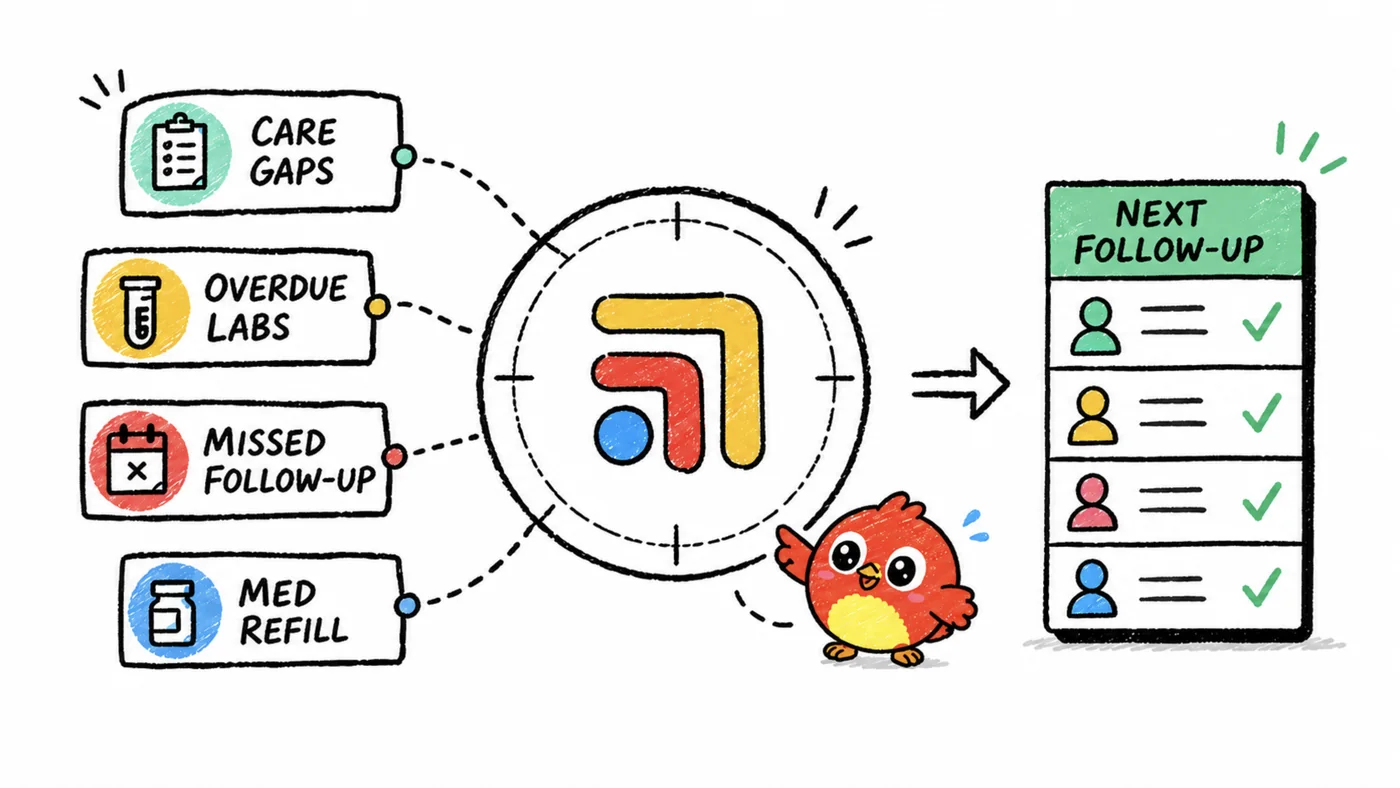
This is the step where revenue leaks without anyone noticing. A card expires, a bank account closes, a member disputes a charge they forgot about. The billing system knows right away, but the person who could fix it with a friendly text often doesn't.
What the published facts show
The vendors publish what failures cost, not how they handle them. Here's what we found.
| Tool | Failed or returned ACH | Card dispute |
|---|---|---|
| Hint | $7.50 ACH return fee | $7.50 per dispute |
| Atlas.md | $5 per failed transaction | $15, plus a refund of the processing fee |
| Stripe | $4 per failed payment | $15 per dispute |
Atlas.md also charges $15 to respond to a card dispute and $20 for an ACH chargeback. None of these vendors publish an automatic retry schedule or a dunning sequence (the series of reminder notices that goes out after a failed payment) in what we checked. So ask each one directly how many times a failed card is retried, on what days, whether the member gets an automatic email or text, and where your team sees the list of failed payments each morning.
Closing the loop with your team
Even the best retry logic can't call a member who changed banks. Someone has to see the failure and reach out, ideally in the same messaging tool the member already uses with you. Spruce can pull in Hint's membership and plan tags, which makes it easier to spot that the person texting you is also the member whose card failed. Our guide to patient texting software for DPC covers how those inboxes are set up.
Step 5: changes, pauses and employer members
Members move, lose jobs, add a newborn or switch plans. Each change touches billing, and if the software can't prorate or switch plans cleanly, your team ends up doing math in a spreadsheet. Atlas.md's subscription prorating helps here, and Hint's contract length and minimum enrollment settings cover the cancellation side. For everyone else, ask the vendor to walk through a mid-month plan change on the demo.
Employer members are a different job entirely, with eligibility lists and one invoice per company. Hint offers employer-sponsored memberships, employer enrollment, eligibility autosync and consolidated billing on Pro and Scale (not Launch), with extra eligibility feeds at $75 a month each. We cover that workflow in software for employer DPC contracts.
Which tool handles which step
With the workflow in mind, here's how the options line up.
Hint
Hint is built around memberships first. Launch is $290 a month for one clinician with unlimited members, Pro is $320 a month (one clinician and 100 members, then $36 per 50 members), and Scale is $770 a month (one clinician and 500 members). If you want to keep your current EHR and run only billing, Hint Core Growth is $110 a month with 100 members, then $45 per 50 more, at 2.75% plus $0.30 per card. Hint lets you pay nothing until your practice launches. It's the best fit if you sell to employers or want billing that stands on its own beside another EHR.
Atlas.md
Atlas.md is $300 a month per registered provider with unlimited patients, covering membership billing, charting, labs and in-house dispensing. Its card rate is the lowest published here. It suits a solo or small self-pay clinic that wants one bill and one system.
Elation Membership Management
Elation runs recurring membership plans directly inside the chart, on top of the $375 per provider Standard DPC plan. It requires a Stripe account and charges 2.99% of card payments. It's the natural choice when the chart comes first and your billing needs are simple.
Akute with Hint Core, Charm and SigmaMD
Akute adds Hint Core billing for $50 a month on Essentials and $110 a month on Premium, so you get Hint's billing engine alongside Akute's EHR. Charm's recurring card charges work on its $200 per provider plan and suit a budget-first clinic. SigmaMD describes itself as an all-in-one EMR for concierge medicine, but it doesn't publish billing features or prices, so treat it as quote-based and ask for a billing demo.
Our take
Pick billing software by walking one family through all five steps on the demo, not by the feature list. Hint wins on plan controls, billing periods and employer billing, Atlas.md wins on per-charge cost and simplicity, and Elation is the easiest path if you live in its chart. Whichever you choose, decide who on your team owns the failed-payment list, because that is the step no software finishes for you. To see how billing fits into your total monthly spend, read what a DPC tech stack costs.
The part most guides skip
Every tool in a DPC clinic is good at its own job, and none of them were built to talk to each other. A patient text turns into a refill in the chart, which needs a review, which needs a reply, and the follow-up lives in someone's head. That isn't anyone's fault. The tools just don't share a to-do list.
That's the job Tabflows does. Tabflows is a dedicated tech team for DPC clinics. We connect the tools you already chose and give your team one place for chat, tasks and patient context, with managed workflows for the repeat work like refills, lab follow-ups and onboarding. You keep every tool you picked.
Frequently asked questions
What is the best membership billing software for direct primary care?
Hint is the billing platform most built around DPC, with plan contract lengths, monthly to annual billing periods and employer billing on its Pro and Scale plans. Atlas.md is the value pick if you want billing, charting and dispensing under one $300 per provider price.
How much does DPC membership billing software cost?
Published prices in November 2026 run from $110 a month for Hint Core Growth (billing only, 100 members) to $290 a month for Hint Launch and $300 per provider for Atlas.md. Card processing comes on top, from 2.1% plus 30¢ (Atlas.md) to 3% plus $0.30 (Hint Launch).
Can Elation bill DPC memberships without Hint?
Yes. Elation's Membership Management runs recurring membership plans inside Elation. It needs a Stripe account and charges 2.99% of card payments or 1% plus $0.25 per ACH payment, capped at $5.
What happens when a DPC member's card fails?
The billing system records a failed payment and, for ACH, often charges a fee (for example $5 at Atlas.md or $4 at Stripe). None of the vendors we checked publish their automatic retry schedule, so ask on the demo how retries and member notices work.
Can patients pay their DPC membership annually?
In Hint, yes. You set monthly or annual as the default, then can let members pay quarterly, semi-annually or annually, with an optional discount for paying ahead.